May 15, 2026
Always Beside You — Jeju's Gods Take a Stroll in Busan
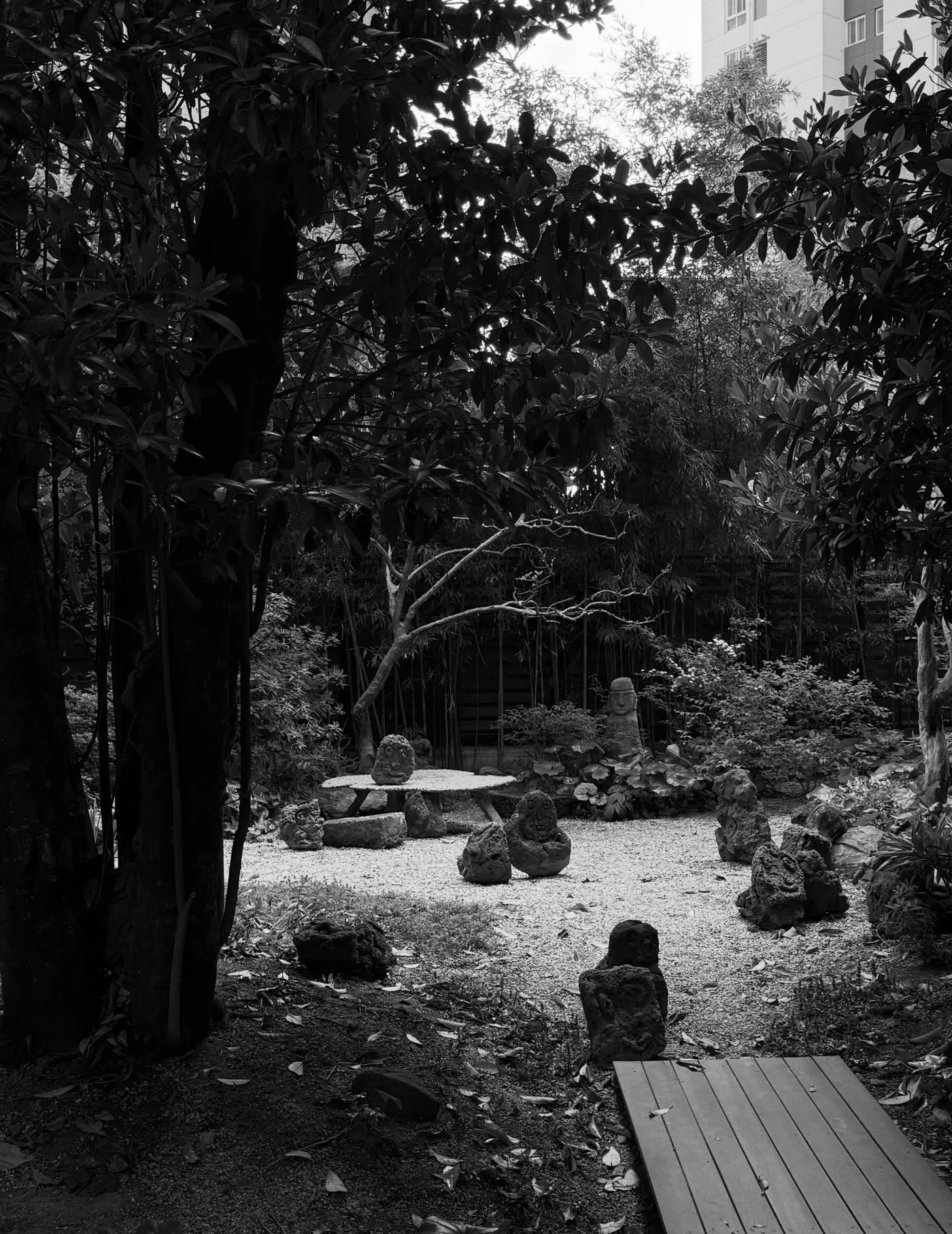
This time, GOBOKII went to Busan. After the first Young Antiques show at Boan1942 in Seoul's Tongui-dong, the second edition took place in a hundred-year-old house across from Busan Station — Ochoryang, Registered Cultural Heritage No. 349 of Korea. Into the garden of this house, built in 1925 and now a hundred and one years old, GOBOKII brought the gods of Jeju Island.
Young Antiques, Ochoryang ran for three months, from April 23 to July 5, 2026. This is a record of those three months — and the story of the twenty stone gods who made the journey from Jeju to Busan with us.
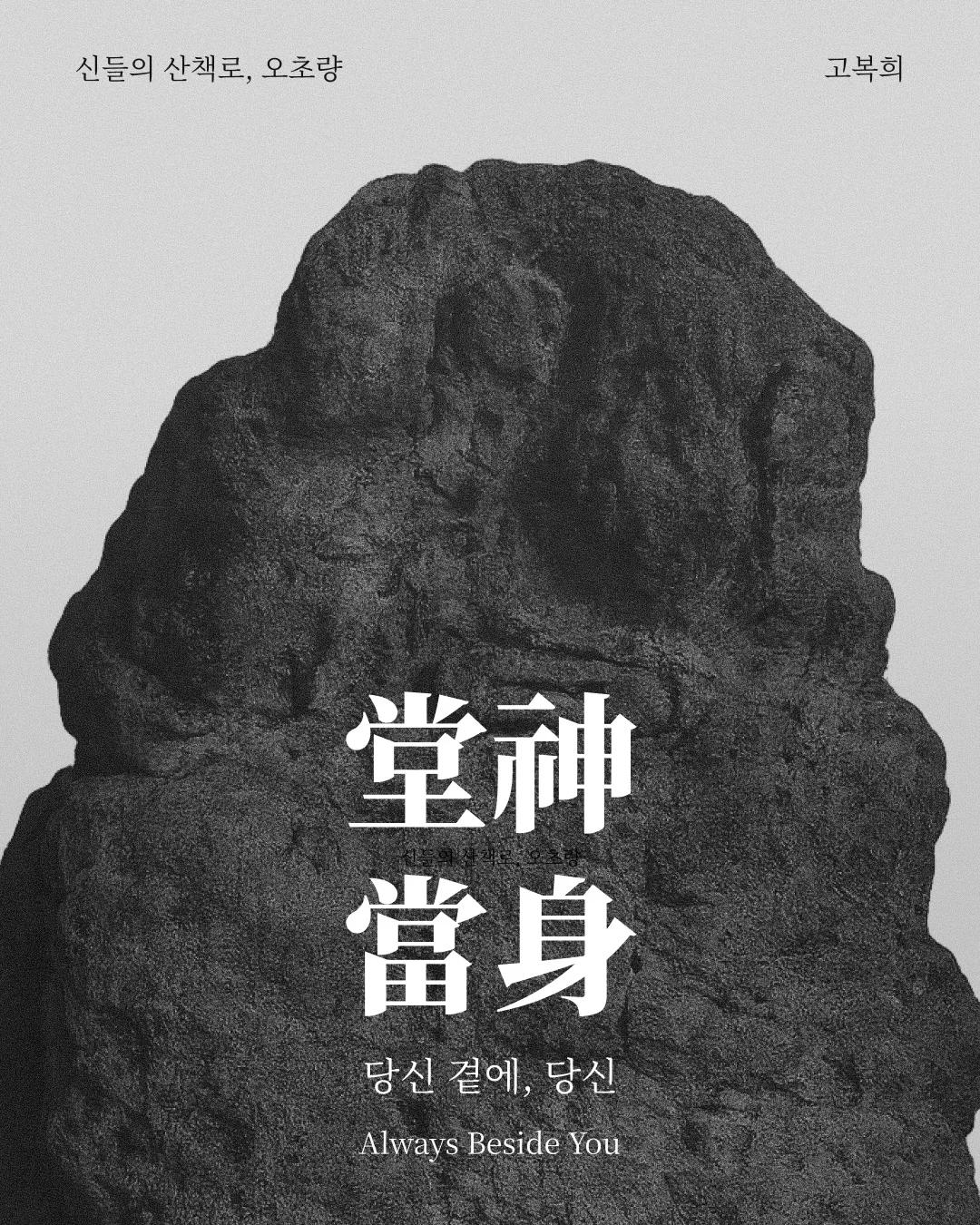
堂神 當身 — Always Beside You
An Experiment Called Young Antiques
Young Antiques is an experiment by a generation of young dealers and collectors who would rather touch, use, and live with antiques than enshrine them solemnly behind glass. Dealers from Dapsimni and Insadong, collectors, and curation brands took part; the first show at Boan1942 last March drew more than five hundred visitors in just two days — proof the experiment was not one person's private taste.
At Ochoryang the format grew bolder: admission was limited to twelve visitors per session, and the reason is lovely — so that people could hold the objects, not just look at them. Three months of handling antiques over tea and sweets in a century-old house; small wonder that JoongAng Sunday, Busan Ilbo, and Monthly Ceramics all covered the show. As the JoongAng Sunday headline put it, the young are finding their way through old things.
A Plan Born in the Garden — a Promenade of the Gods
GOBOKII's part in the exhibition began the moment it first saw Ochoryang's garden. One thought arrived as soon as the path crossing the hundred-year-old courtyard came into view: lay a "promenade of the gods" right here. Two more words followed naturally — "the dangsin beside you," and "comfort."
To give the idea shape, GOBOKII turned to Jeju: the shamanic guardian statues (dangsin, 堂神) that watched over villagers' lives from shrine houses — basalt figures of the post-Joseon era, rough-hewn and deeply folk in character. These gods, who guarded their villages with rather stern faces, were escorted from their shrines to Ochoryang, and a promenade was laid for them in the hundred-year-old garden. For gods who rarely leave Jeju, it was very likely their first group business trip.
Jeju, Home of Eighteen Thousand Gods
Jeju Island is called "the home of eighteen thousand gods." Each of its 499 villages once had a guardian deity — a dangsin (堂神) — who shared the joys and sorrows of the villagers and watched over their well-being. — from the exhibition text, citing the Jeju Musingung
On Jeju, a god was not a distant being in the sky but a neighbor — one per village. People entrusted their dangsin with a child's illness, a family out at sea, the year's harvest. That the god's name "dangsin" happens to sound exactly like the Korean word for "you" (當身) is a coincidence — but at this exhibition, the coincidence became the theme. Always beside you.
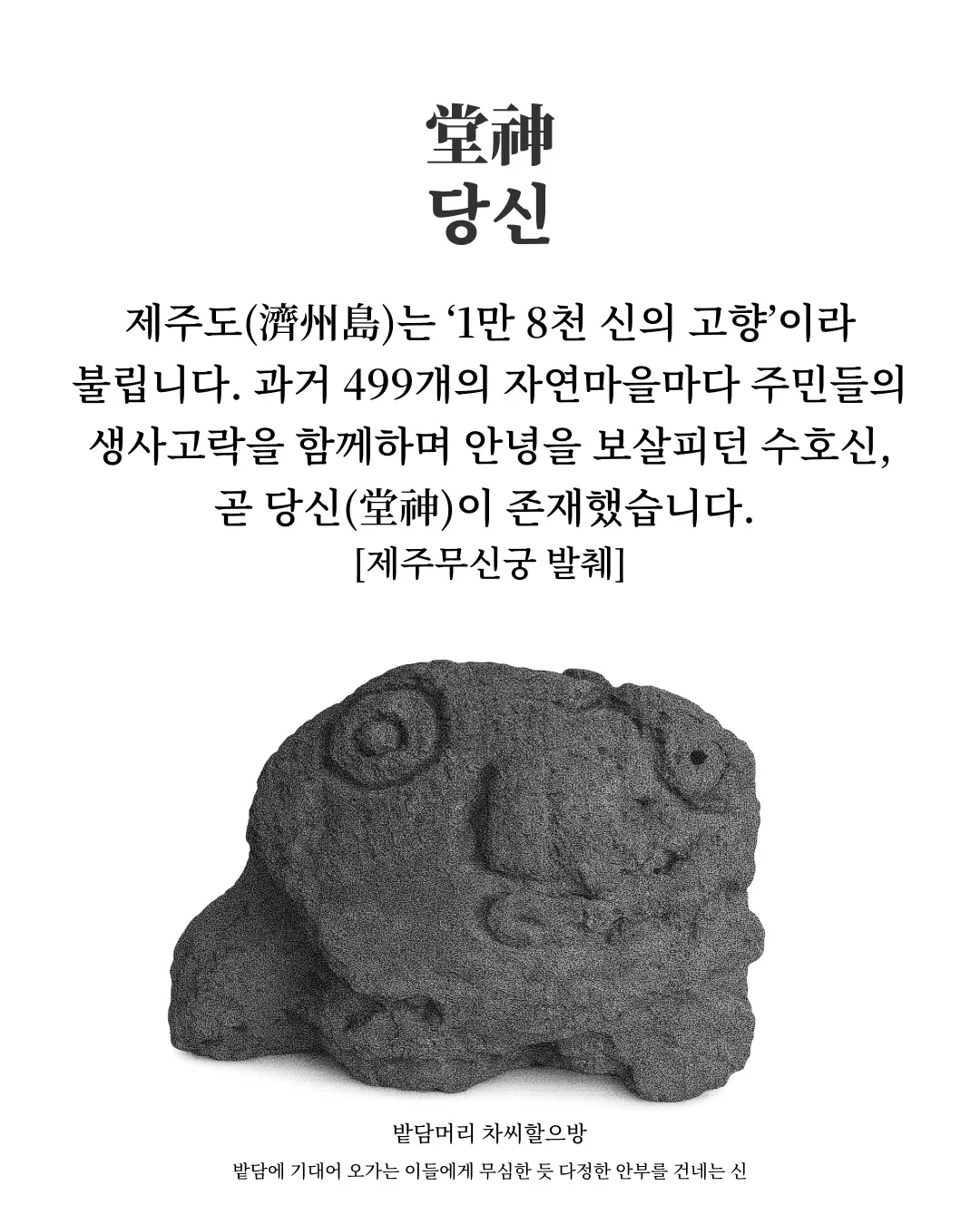
Chassi-harubang of the field wall — a god leaning on the stone fence, offering passersby an offhand but tender greeting
Carving Fear into a Face
Our ancestors carved the vague and fearsome objects of their faith into visible faces. Rough yet warm in expression, these statues remind us that the divine is not far away, but a familiar companion guarding our happiness at our side. — from the exhibition text
Each god on the promenade has a name and a portfolio. Chassi-harubang of the field wall leans on the stone fence and offers passersby an offhand but tender greeting; Daebyeolwang of the flowering yard wears a bright smile on his rough stone face and minds the village's happy occasions. The titles say god, but the job descriptions say neighborhood elder — reading the name cards, you keep catching yourself smiling. Not the nervous smile of fear; the smile of recognition.
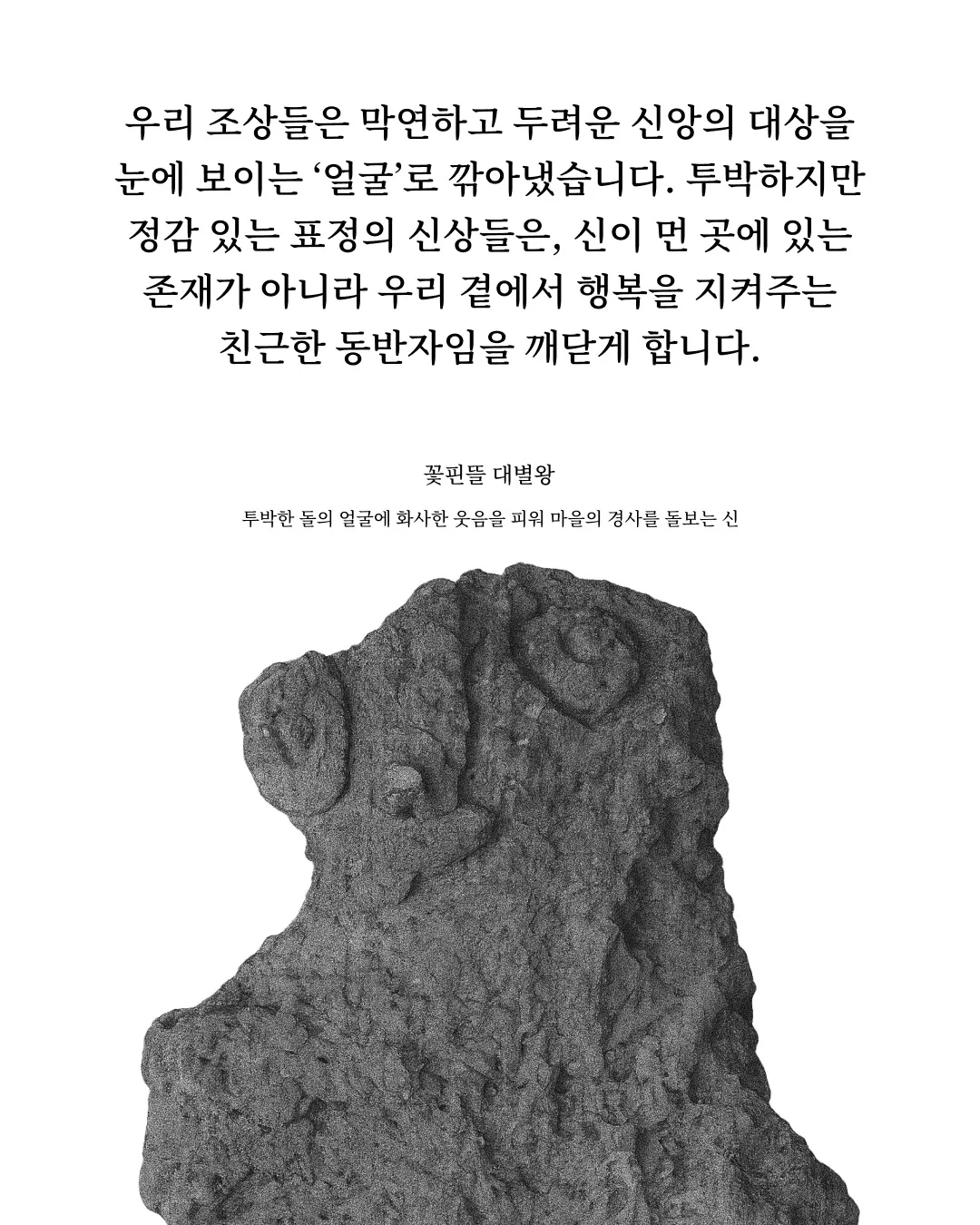
Daebyeolwang of the flowering yard — a bright smile carved on rough stone, minding the village's happy occasions
The Promenade of the Gods
Along the path crossing Ochoryang's garden, basalt gods who have endured eons took their places. Porous volcanic stone lets the world's noise pass through and keeps only the quiet. The exhibition preface guided visitors this way:
A walk here is not merely time spent looking at stones, but a process of discovering the ordinary yet great divinity hidden within yourself. — from "Promenade of the Gods, Ochoryang"
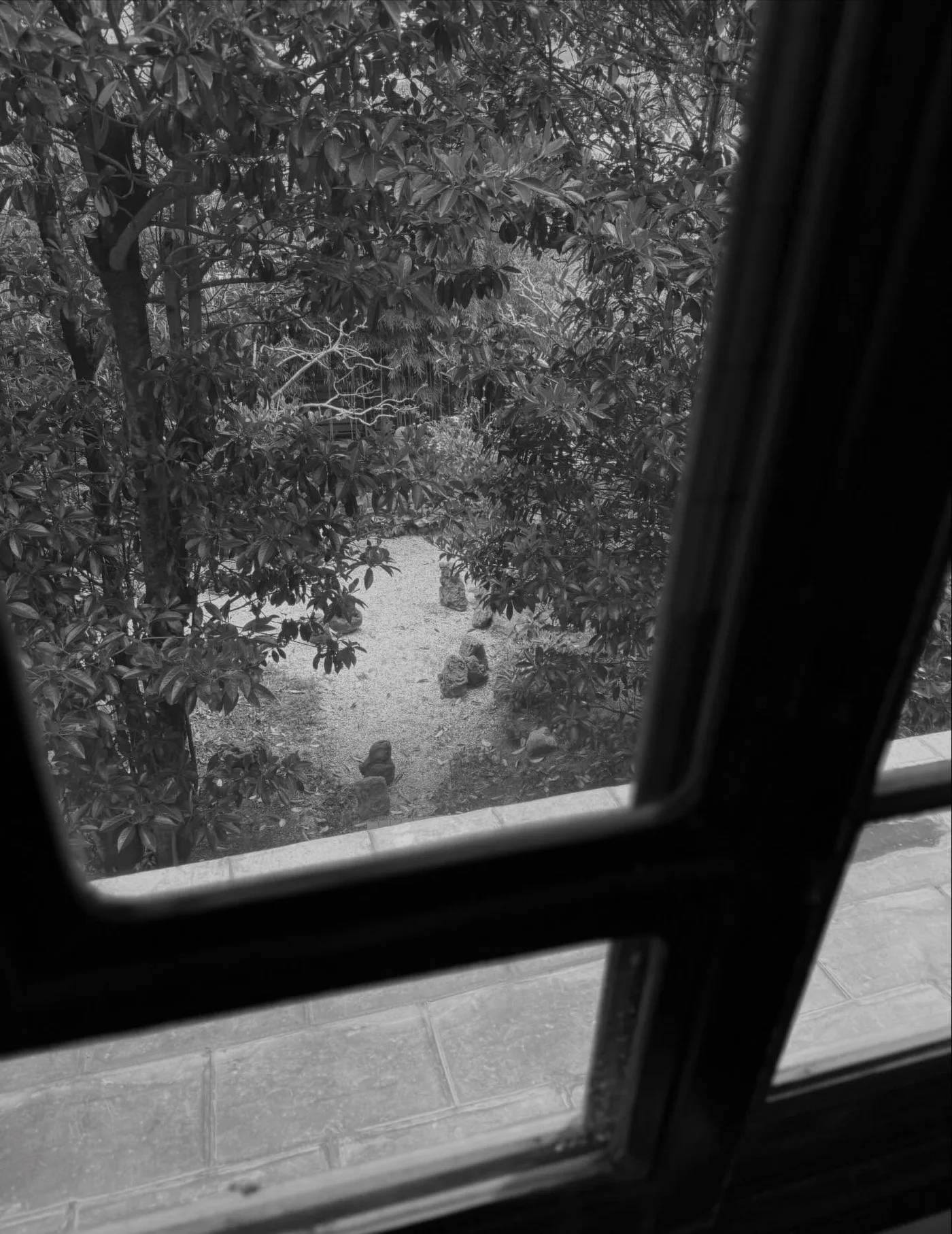
A dangsin at the window, looking out over the garden
The finest moment of the show was looking out at the gods through the window frames of the Japanese-style house: a 1925 building, post-Joseon Jeju stone, and a 2026 visitor held in a single frame — and strangely, none of the three seemed out of place. That is the mark of good antiques: wherever you put them, they behave as if they had been there first.
Indoors — Two Iron Glazes, Five Centuries Apart
If the garden belonged to the gods, the interior held two ceramic works. One was an early-Joseon buncheong flask from the GOBOKII collection: a vessel a 15th-century potter refused to discard, mending its tear with iron glaze and firing it again — the repair still beautifully visible. The other was an iron-glazed Buddha by the contemporary potter Oza Craft, today's iron glaze brought to a serene finish.
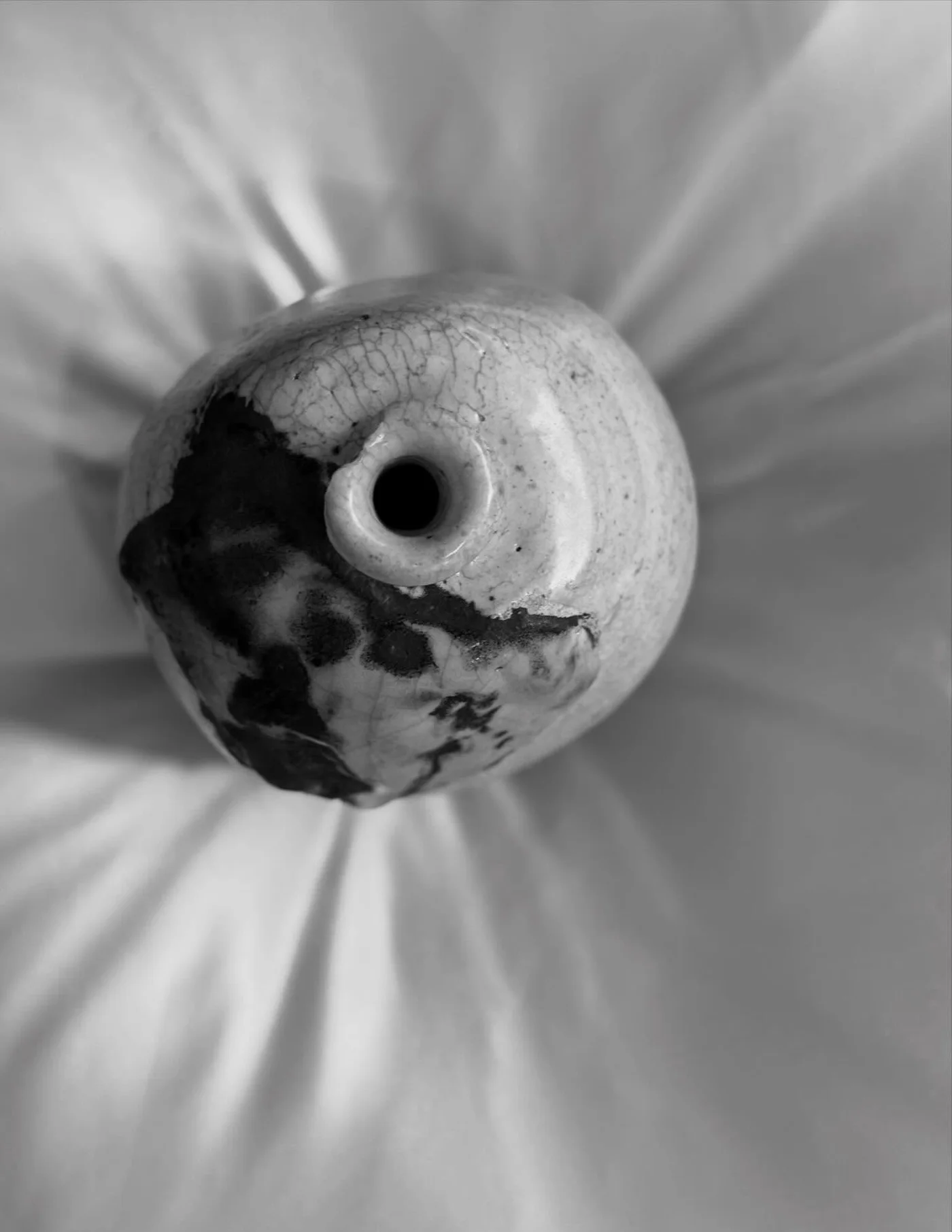
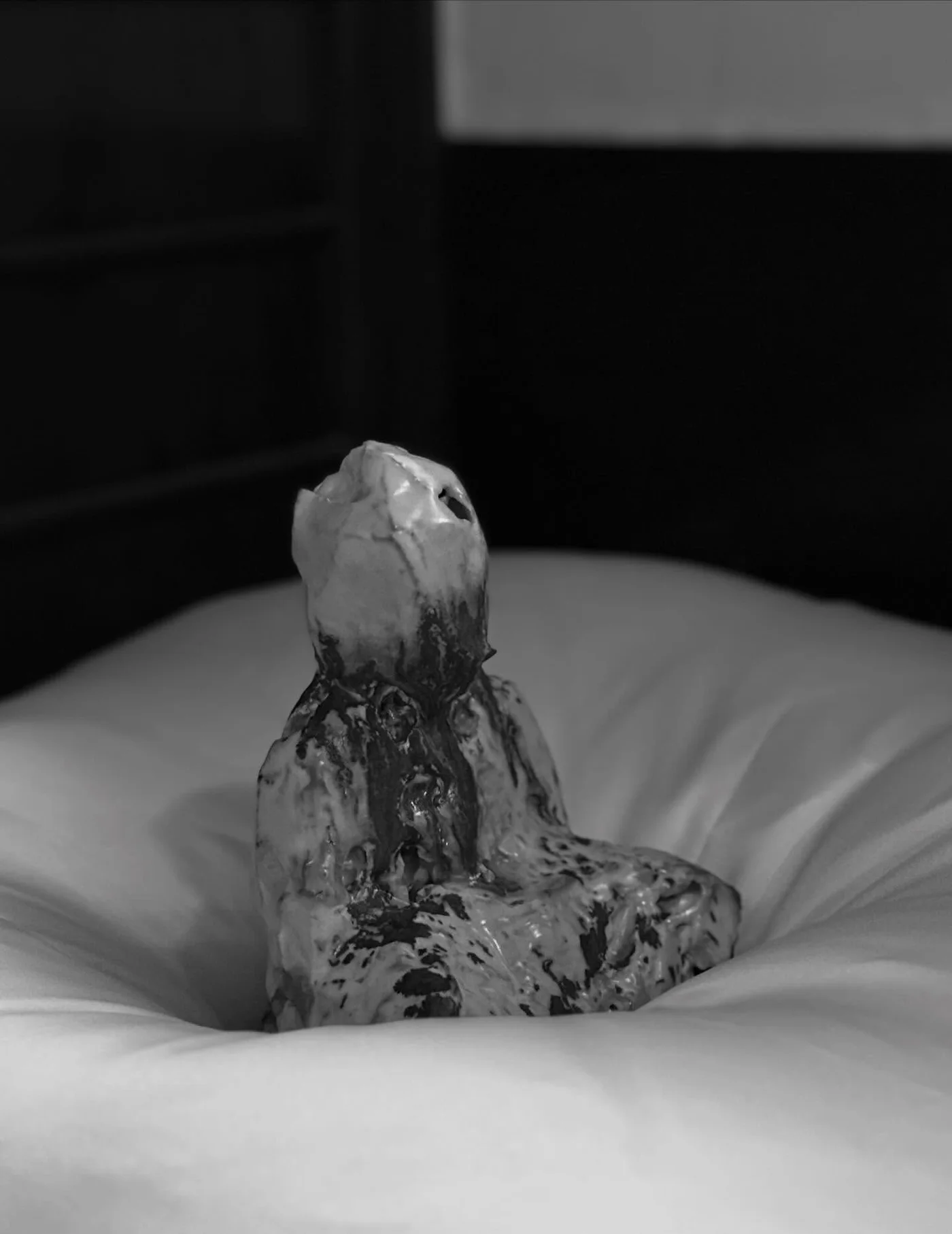
Early-Joseon flask — a 15th-century potter mended the torn vessel with iron glaze and fired it again · Oza Craft's iron-glazed Buddha — five centuries later, the same glaze
We hoped these two makers, five hundred years apart and speaking through the same glaze, would meet meaningfully at Ochoryang. The 15th-century potter used iron glaze to save what was broken; the 21st-century potter uses it to shape the Buddha's face. The mending hand and the praying heart — in the end, they point the same way.
Comfort — the Dangsin Beside You
When the three months ended, the gods packed up again, but the first word Ochoryang offered remains: comfort. It may be the shortest answer to why antiques hold the hearts of a younger generation now. Among all the flawless new things, the fact that one rough face which has endured centuries sits beside you is a greater consolation than you might expect.
May you carry the smile of the dangsin you met at Ochoryang into your everyday life. The divine is not far away — it is always seated at your closest side, praying for your happiness. — from "Promenade of the Gods, Ochoryang"
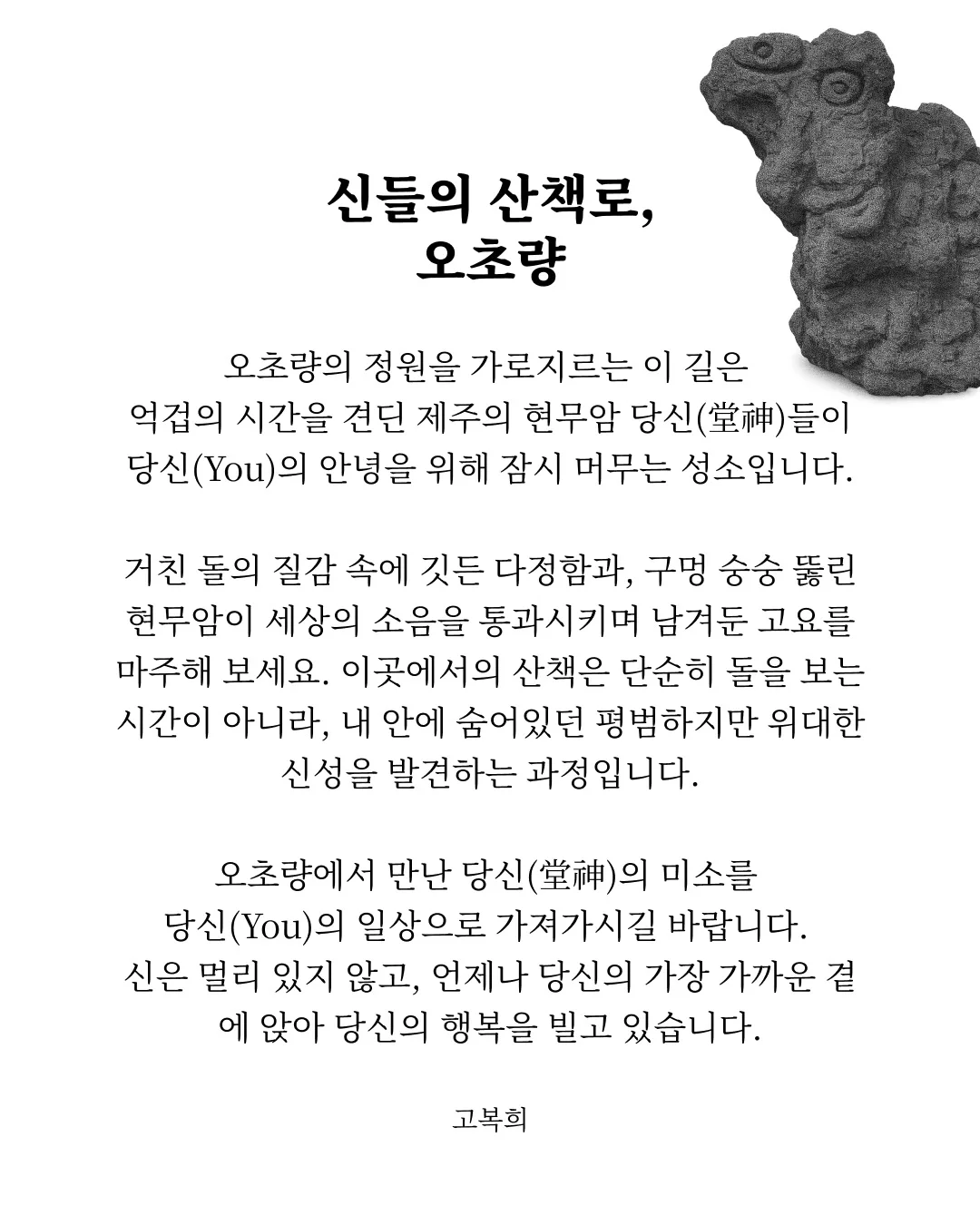
Exhibition preface, “Promenade of the Gods, Ochoryang”
Exhibition
Young Antiques, Ochoryang
Apr 23 – Jul 5, 2026 · Ochoryang (81-1 Choryang-dong, Dong-gu, Busan; Registered Cultural Heritage No. 349)
GOBOKII presented: "Promenade of the Gods" (Jeju dangsin statues), an early-Joseon buncheong flask, and an iron-glazed Buddha by Oza Craft
Text and photographs: GOBOKII — announcements: Ochoryang · GOBOKII · the dangsin story. The exhibition was covered by JoongAng Sunday, Busan Ilbo, and Monthly Ceramics.
Related

July 20, 2026
My Name Is Gyeryongsan
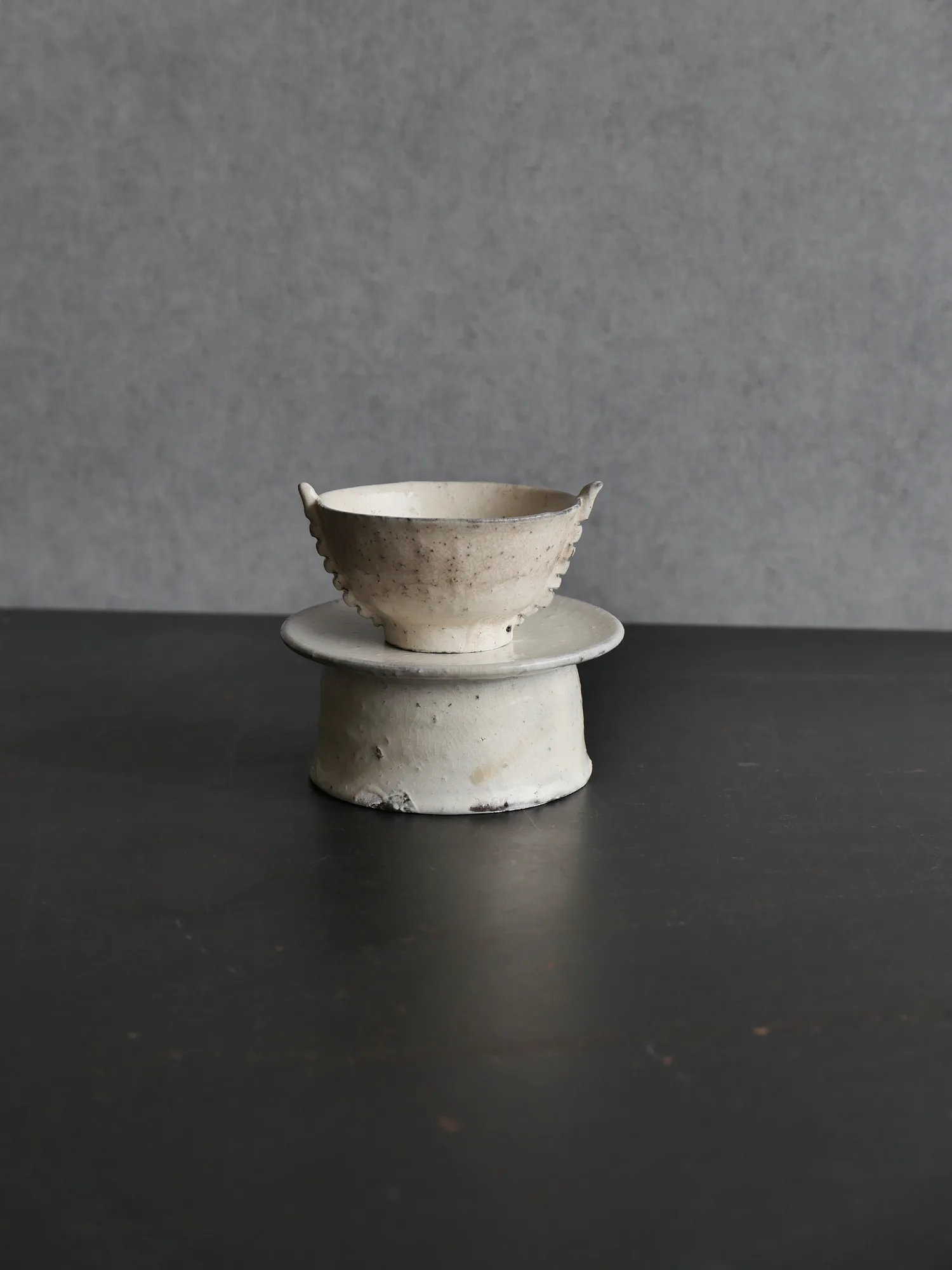
An exhibition at GOBOKII unfolding the full spectrum of Gyeryongsan buncheong — inlay to brushed slip, white porcelain to black glaze, kiln failures and shards, repatriated works and the original 1920s excavation reports. July 25 – Aug 2, 2026.
June 28, 2026
쟁이상점 : Eun Seongmin
GOBOKII presents 쟁이상점 with Eun Seongmin — Joseon white porcelain & buncheong. 29 Jun–4 Jul 2026, Seoul.
December 6, 2025
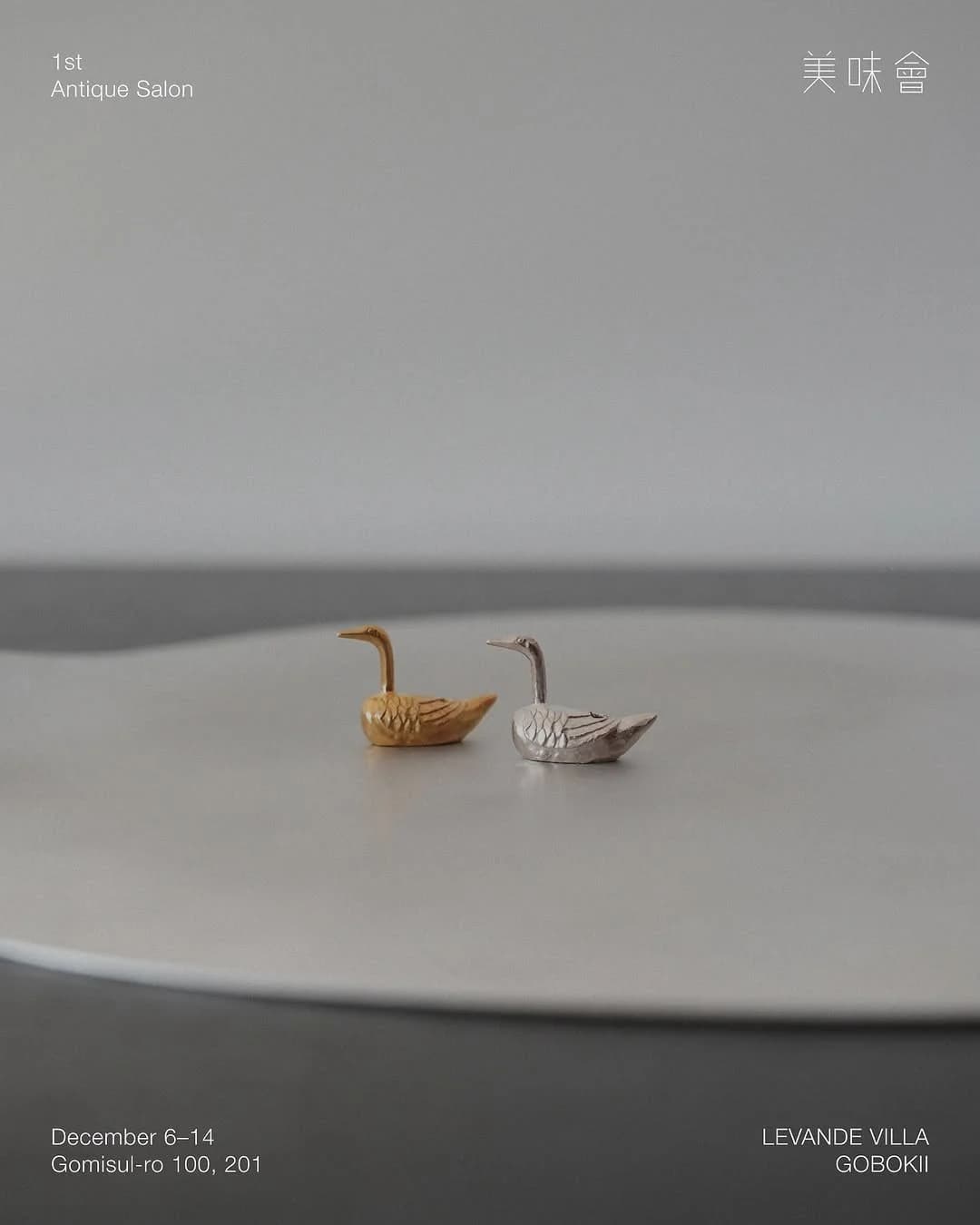
Mimihoe — The 1st Antique Salon: Levande Villa × GOBOKII
Beyond visual beauty, antiques carry their own taste — "mimi" (美味). The first salon of Mimihoe, a collective by GOBOKII and Levande Villa, gathered curated vintage furniture, Joseon woodware, and a specially commissioned incense holder in one room. Seoul, Dec 6–14, 2025.
September 4, 2025
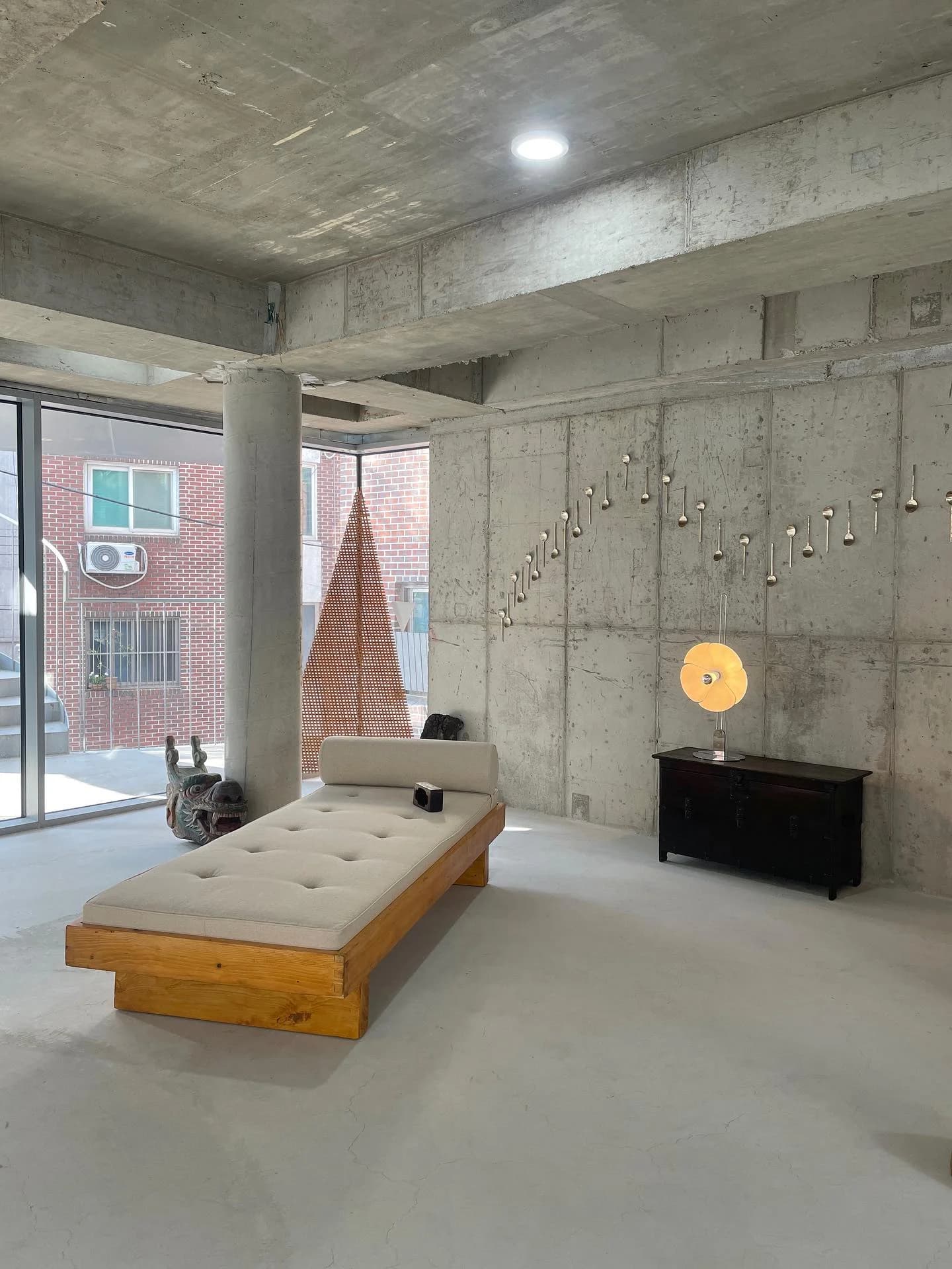
Hyeongsim (形心) — Le Modulor × GOBOKII
“Form follows soul” — departing from Charlotte Perriand’s words, an exhibition placing the furniture of France’s modern masters and the objects of Joseon in one space. Le Modulor, Yeonnam-dong, Sep 4–13, 2025.