May 15, 2025
Where Do I Even Start? — 10 Korean Antiques to Buy First
Some of the first people to fall deeply in love with Korean antiques were not Korean at all. Yanagi Soetsu, founder of Japan's mingei folk-craft movement, was captivated by Joseon soban tables and white porcelain and spent much of his life writing about them; the Japan Folk Crafts Museum he founded in Tokyo still holds thousands of Korean pieces. In 1935 the British potter Bernard Leach bought a moon jar in Seoul, saying he was taking happiness home with him. That jar now lives in the British Museum.
In other words, Korean antiques have been a certified good taste for about a century. In an age when people happily open their wallets for a Hans Wegner side table or a George Nakashima bench, objects carrying the same sensibility — plus a hundred years of lived time — can still be found at reasonable prices. That is exactly why now is a good moment to start.
There is no need to begin grandly. Here are ten pieces we recommend to first-time buyers, chosen by a single measure: not how precious an object is, but whether you will keep wanting to look at it.
1. Soban — Korea's Original Side Table
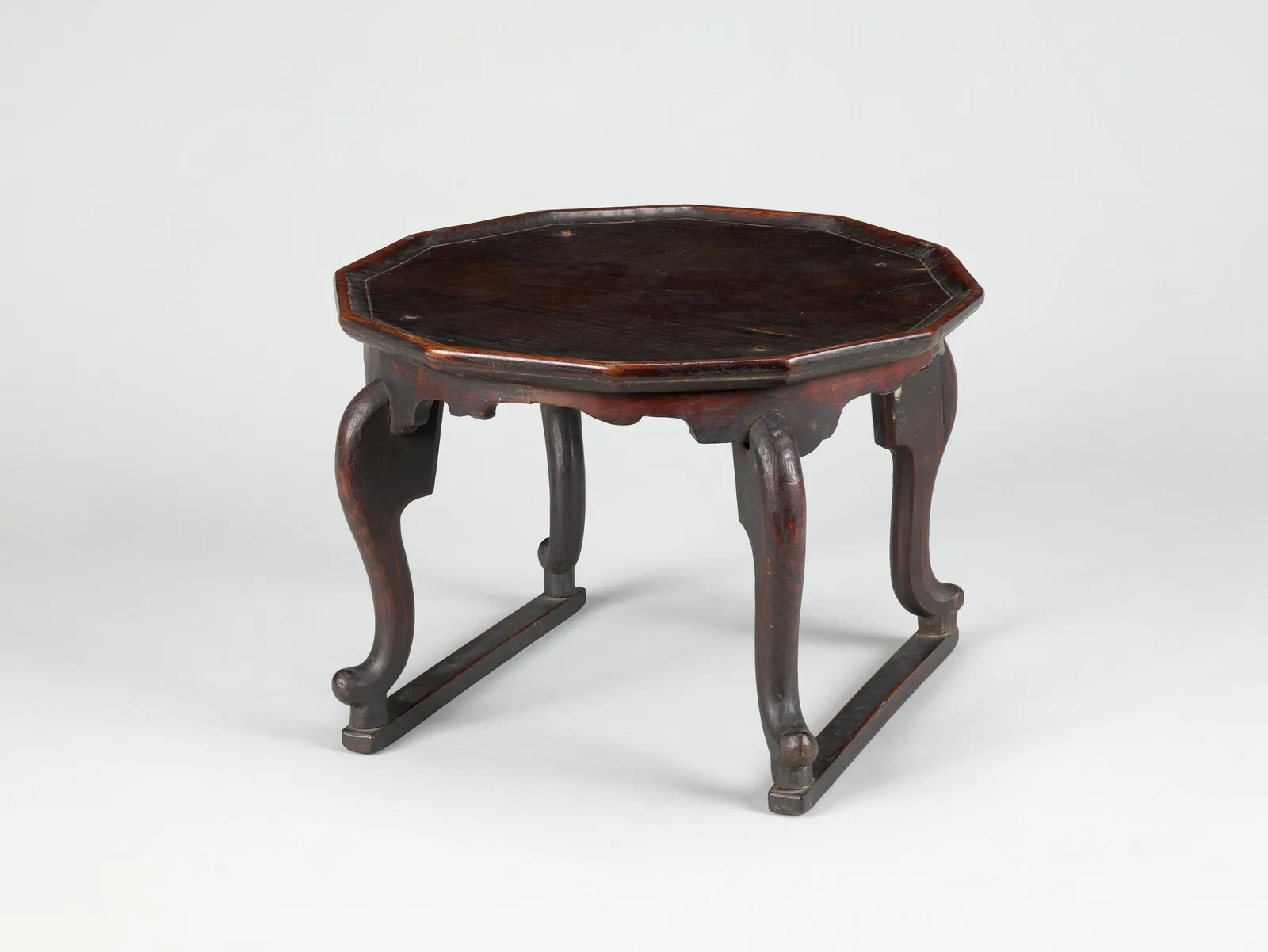
Twelve-sided soban with tiger-paw legs, National Museum of Korea · e-Museum (KOGL Type 1)
A soban is a small table light enough to carry with one hand, and it has long been the classic first purchase in Korean antiques. It was the object Yanagi treasured most among Joseon crafts, and his eye was right. Low, light, at home anywhere, leanable against a wall when not in use — the problem mid-century designers solved under the name "side table" had been solved by Joseon soban makers centuries earlier. Had it been born in Denmark, it would sit in a design museum; born in Korea, it still wears a price tag within reach.
Beside a bed it becomes a nightstand; beside a sofa, a tea table; by a window, a stage for a plant and the afternoon light. When choosing, look first at the legs — curved like a tiger's (hojokban) or a dog's (gujokban) — then at the proportions of the top, the flow of the grain, the wear on the corners. Repaired legs are not a flaw but a résumé: not many pieces of furniture have reported for work three times a day for a hundred years.
2. A Small White Porcelain Wine Bottle — an Elegant Retirement
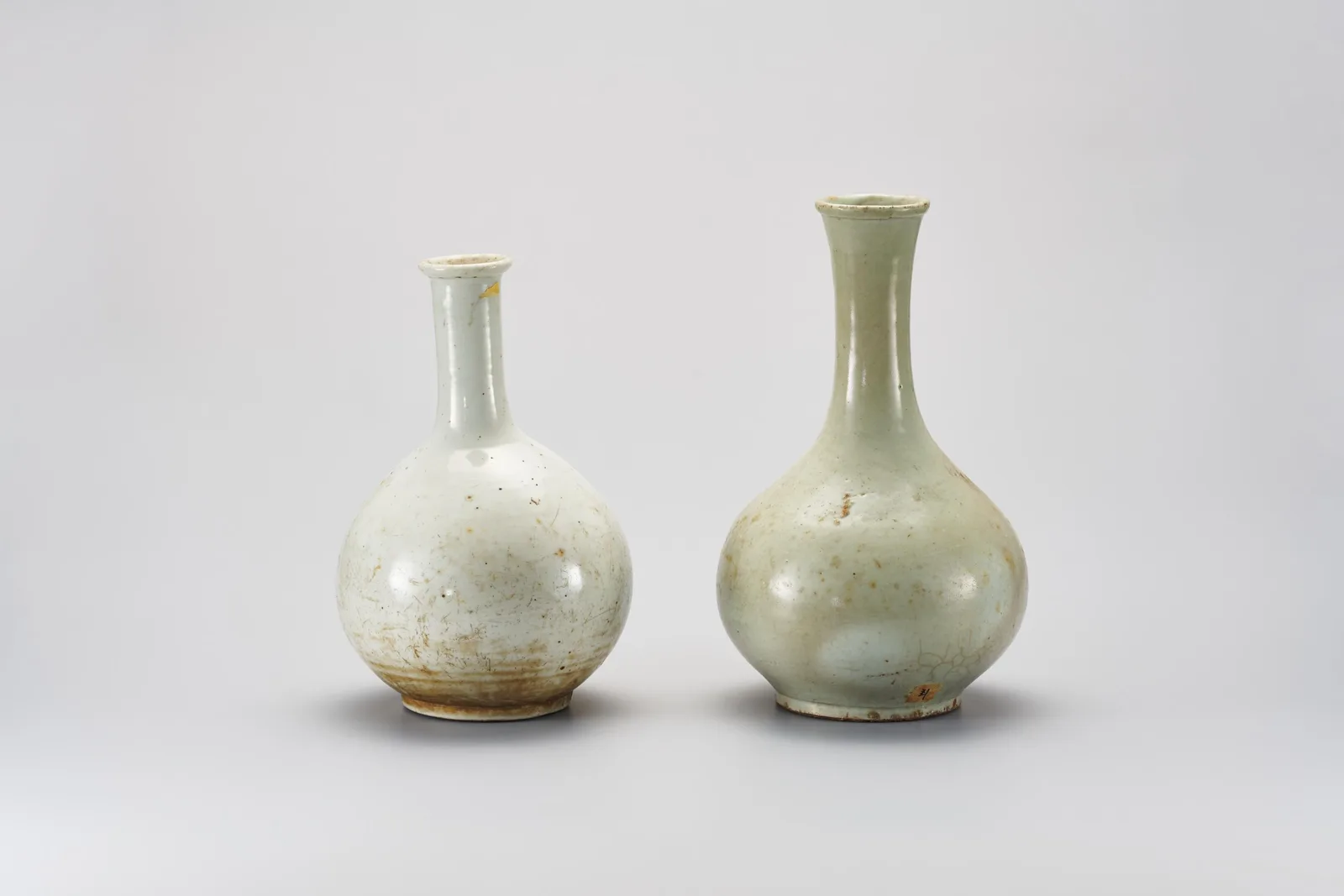
White porcelain wine bottles, National Museum of Korea · e-Museum (KOGL Type 1)
These little bottles once carried wine across Joseon dinner tables. They are also the friendliest door into the world Japanese collectors have loved for over a century as "Richo hakuji" — Joseon white porcelain. Lucie Rie famously kept a Korean moon jar in her London studio, but you need not start with a moon jar: a single bottle with a slender neck and a rounded belly holds the same white, the same warmth.
The charm is in curves shaped by use — a body swelled to fit the hand, a neck trimmed so the wine would not dribble. A bottle that spent its working life pouring drinks now enjoys retirement on a windowsill holding a wildflower or two, and, given its former profession, it handles them expertly. It also looks perfectly good holding nothing at all. When choosing, do not hunt for flawless white. A run of glaze, an iron speck from the kiln, the knife marks on the foot, a bluish shadow on the shoulder — that unevenness is the entire pleasure. A slightly tilted neck is not a defect; it is a facial expression.
3. High-Footed White Porcelain Dishes and Small Bowls — a Taste Lesson for Pocket Money
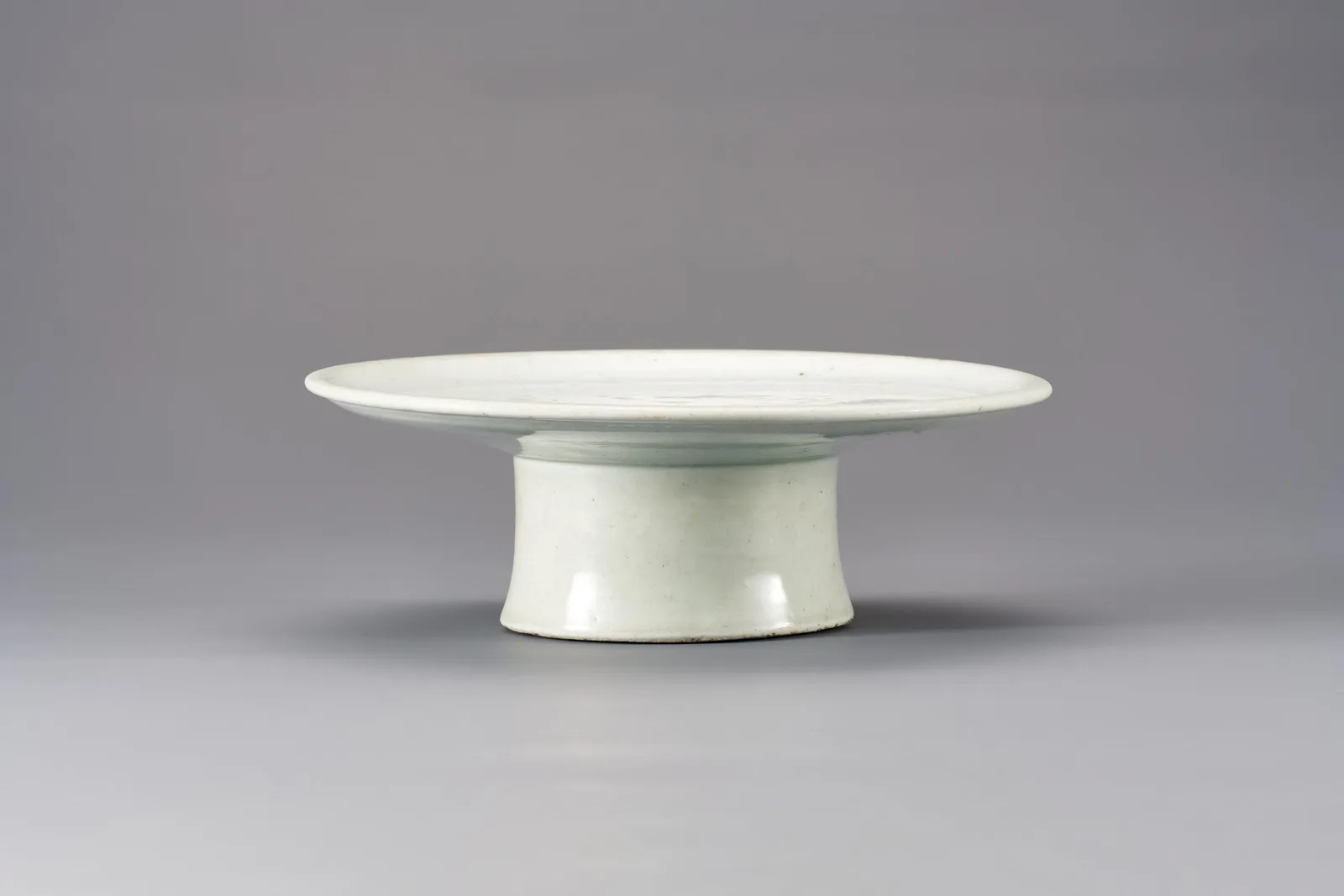
White porcelain ritual dish, National Museum of Korea · e-Museum (KOGL Type 1)
Large jars make both your eyes and your wallet nervous; small white porcelain does not. High-footed dishes and little jongji bowls are the best first textbook: affordable, forgiving, and astonishingly versatile. The high-footed dish has one great talent — it dignifies whatever you put on it. Two apples become a still life; an incense holder becomes a small altar; even convenience-store chocolate starts to look like it came from a department-store food hall. Joseon understood the physics of the cake stand centuries before the cake stand.
The small bowls, meanwhile, are quietly industrious: a tray for rings and keys, a rest for incense, a saucer for a teacup — doing, namelessly and for centuries, the job design shops now sell as a "catchall tray." When choosing, turn the piece over. The trimming inside the foot, the bare clay where the glaze stops, the stacking marks from the kiln — a white porcelain's résumé is written on its underside. Train your eye on three or four small pieces before you buy a big jar; every seasoned collector recommends the same order.
4. Wooden Ritual Vessels — Round Plates and the Pyeontl
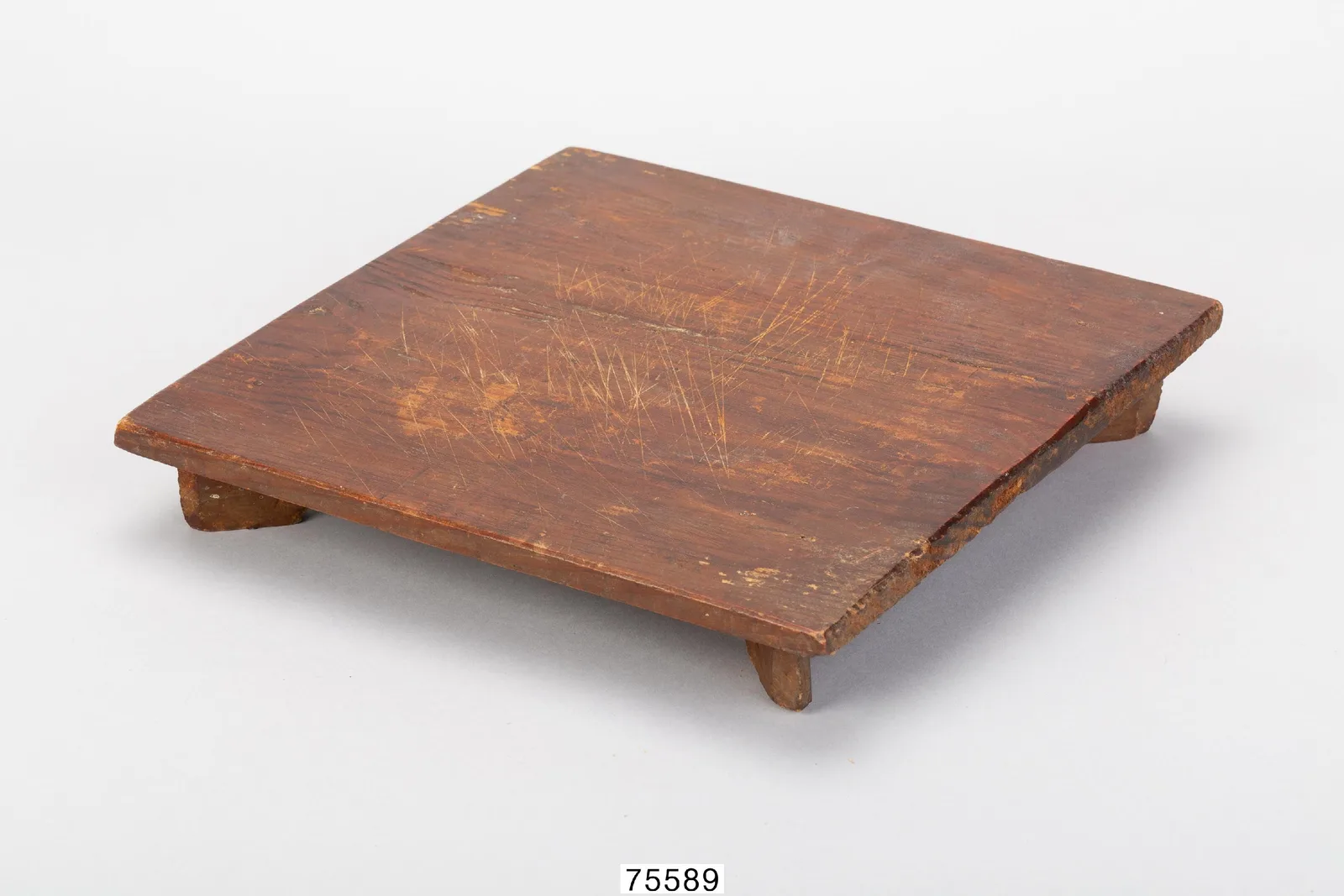
Wooden pyeontl stand, National Folk Museum of Korea · e-Museum (KOGL Type 1)
These wooden vessels once stood on ancestral rite tables. The round plates, and the flat-topped stand called a pyeontl once used for stacking rice cakes, are ideal first pieces. Their first charm is a color new wood cannot fake — a deep, dry brown laid down slowly by decades of hands, incense smoke, and air. If George Nakashima won the world with grain he revealed, Joseon woodware wears grain completed by the people who used it.
A round plate is a fruit bowl as-is: three apples on it and you will not envy Cezanne. The pyeontl is even more fun — put incense on it and it is an incense stand, a plant and it is a plant stand, a favorite object and it becomes that object's private podium. A vessel that once held offerings for the ancestors now holds up your taste; as second careers go, hard to beat. When choosing, read cracks, warps, and repairs not as disqualifications but as a CV — wooden pegs instead of iron nails are a good sign, and the joint where foot meets plate rewards a close look. It is not far from the spirit of kintsugi, which mends broken bowls with gold.
5. Brassware and Brass Spoons — the Weight of Quiet Luster
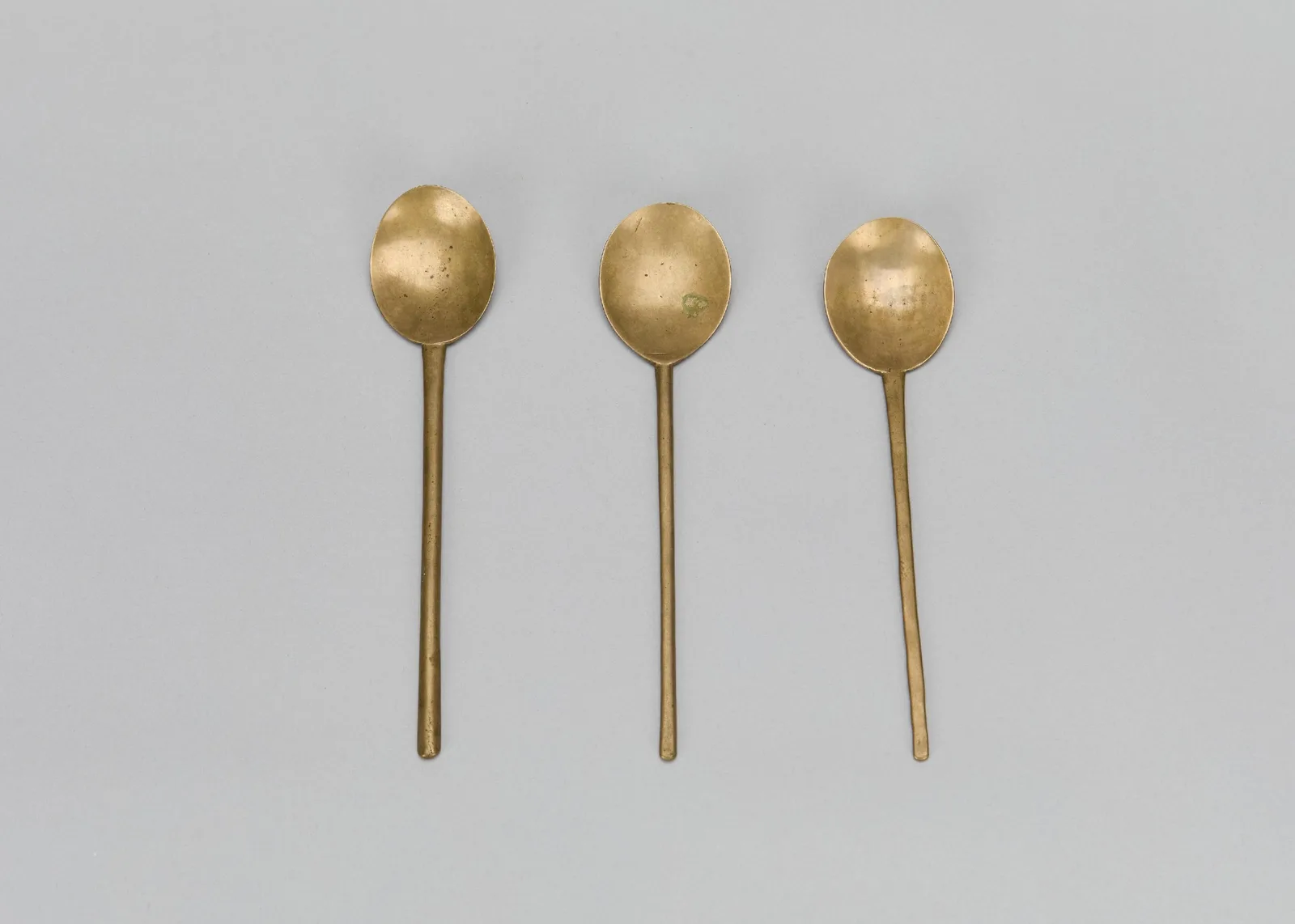
Brass spoons, Yecheon Museum · e-Museum (KOGL Type 1)
Yugi — Korean brassware — is the heaviest way to begin, and we mean that literally. First-time holders are surprised twice: once by the weight, and once by realizing how reassuring that weight feels. The surface glows dully but deeply, and for exactly the same reason that time-darkened brass lamps outsell new ones in the mid-century vintage scene, naturally oxidized yugi is attractive as it is. What others buy and call "aging," yugi has simply lived.
A wide brass bowl works as a tray or an object bowl; a small one, as an incense rest. And brass spoons are that rare antique you can use at dinner tonight. The weight in the hand, the cool touch on the lips — they change the manners of a meal; the same soup somehow tastes one rank higher from a brass spoon. Or lay a few in a dish as sculpture and use none of them. Whether to polish them bright or leave them dark is purely a matter of taste — there is no right answer, which is the fun, and polishing turns out to be excellent meditation.
6. Rice-Cake Stamps and Sweet Molds — Woodcuts That Fit in Your Hand
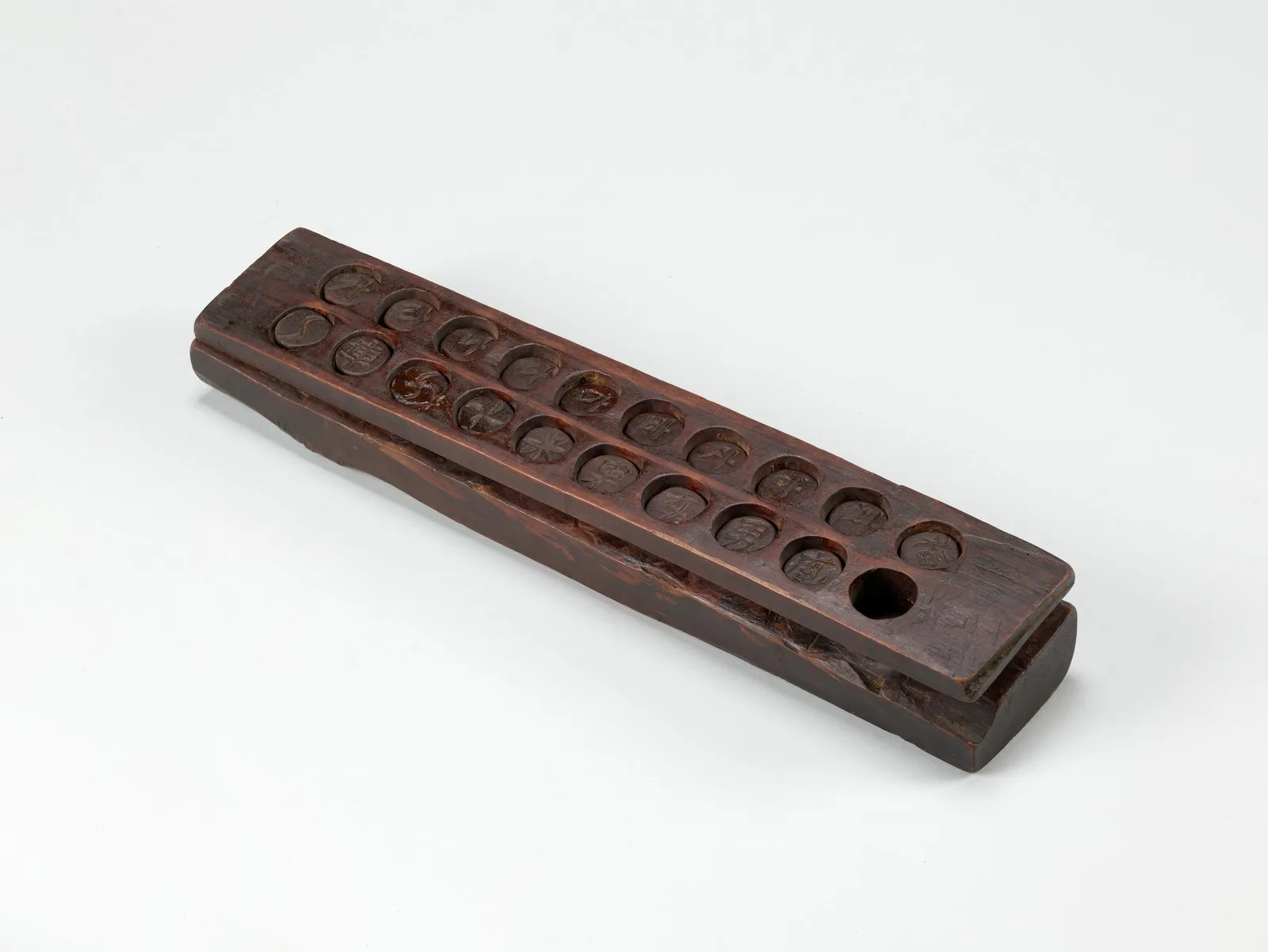
Wooden dasikpan mold, National Museum of Korea · e-Museum (KOGL Type 1)
Tteoksal stamped patterns onto rice cakes; dasikpan pressed tea sweets into shape. Their working days over, they have been reborn as small sculptures. Flowers, auspicious characters, comb-tooth and taegeuk geometry — the world of patterns carved into one palm-sized block of wood is wider than you expect. As Europeans collect antique butter molds and the Japanese collect confectionery molds, these tend to multiply once you notice them. Entry-level in difficulty, expert-level in addictiveness — that is the trap.
Their virtue is the beauty of intaglio. Because the pattern had to emerge in relief on the cake, the carver worked in reverse and in mirror image: Joseon's carpenters were, in fact, printmakers. Today you stamp them onto your eyes instead — stood against the books on a shelf, laid on a desk as a paperweight, or hung in a row like a small print series. When choosing, look at the depth and confidence of the carving; the same flower differs completely by the hand that cut it. A surface polished smooth by rice flour is proof the piece was a worker, not an ornament — greet it warmly.
7. Godret Stones — a Little Sculpture for Your Desk
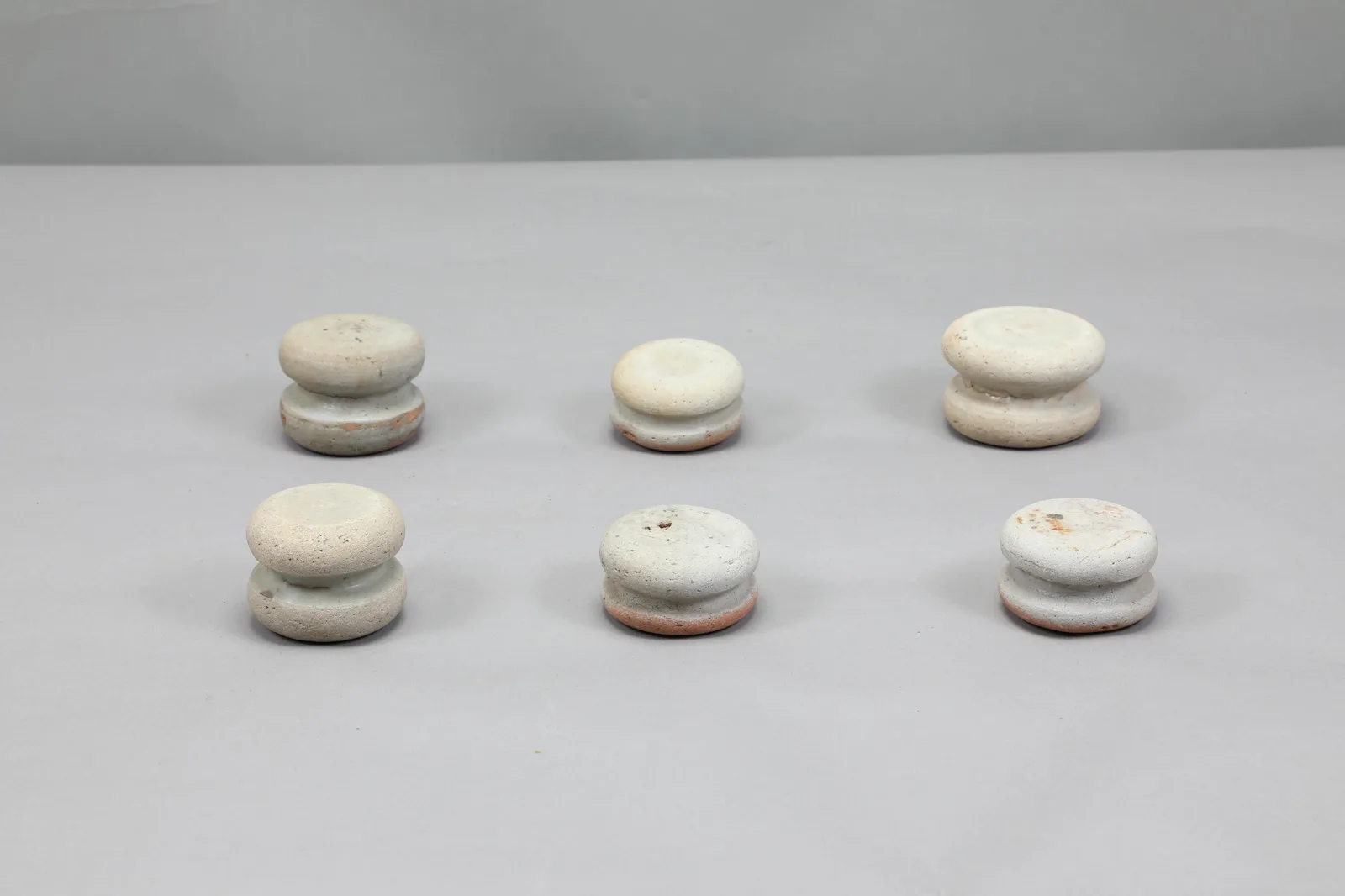
Godret stones, Cheonan Museum · e-Museum (KOGL Type 1)
Godret stones were weights that held the threads when weaving mats and blinds. Tools, plainly — yet look now and they are unmistakably small abstract sculptures. Waisted ones, pebble-round ones, top-angled ones, no two alike; naturally, since no Joseon artisan ever meant them as art. They just shaped stones convenient for winding thread, and a century later people gaze at them like sculpture. Indifference may be the most durable design philosophy there is. You cannot put an Isamu Noguchi on your desk, but you can put a stone with a hundred years of work experience.
Use is free-form: paperweight, shelf object, silent companion between books — set one on a pile of documents and you have briefly reinstated it in its old job. When choosing, look at the texture of the stone, the corners rounded by wear, the groove where the thread once wrapped; the way it settles into your palm matters too. Its value lies not in rarity but in expression. Not a precious object — an object you keep looking at for no good reason. It is the smallest, cheapest textbook on the essence of antiques; as tuition goes, this is practically auditing for free.
8. A Small Wooden Box — If Furniture Feels Like Too Much
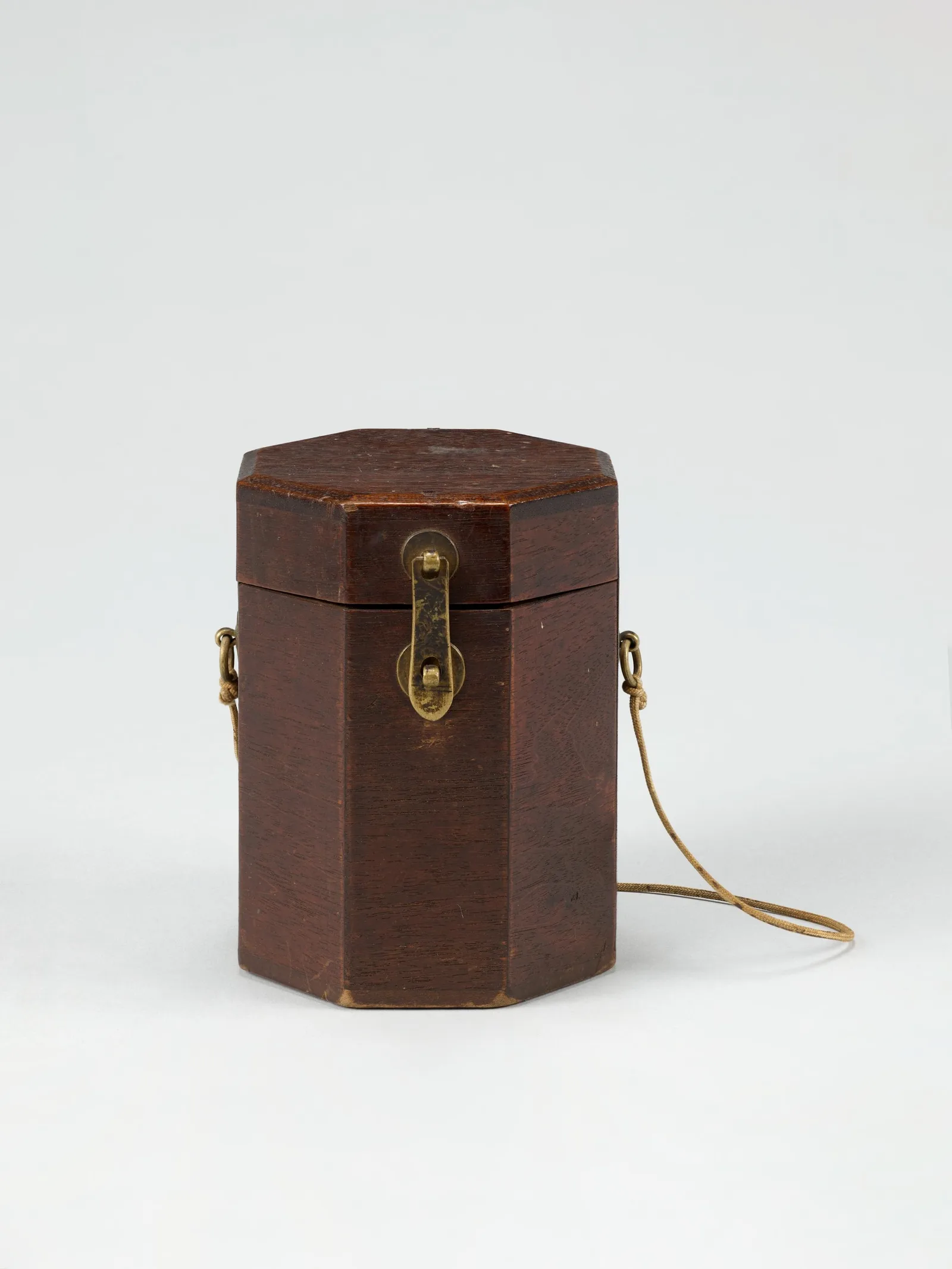
Octagonal wooden box, National Museum of Korea · e-Museum (KOGL Type 1)
Joseon furniture is a deep world, but starting with a full chest requires a ready house, a ready heart, and a ready budget. A small wooden ham — a lidded box once used for letters, jewelry, or seals — is the perfect first step. Sizes run from two cupped palms to something that sits on your knees, and every one of them carries the particular thrill of a thing with a lid. There is a reason "Richo furniture" has long been beloved in Japan for tea rooms and studies: these plain proportions and reticent faces settle quietly into any space.
The best part is that a ham does not stop at decoration. Feed it your jungle of charging cables and watch a Joseon box store the chaos of the twenty-first century; give it receipts and seals and it is a file box; tea and tea tools, a small tea chest. It sits without friction on a mid-century sideboard or a modern console — old wood is a lingua franca that ignores nationality. When choosing, check the metal fittings of white brass or iron, the color and grain of the wood, and by all means open and close it once. The feel of the lid, the sound of the hinge — a well-made box even closes with a different sound.
9. Anonymous Folk Paintings — Better for Having No Signature
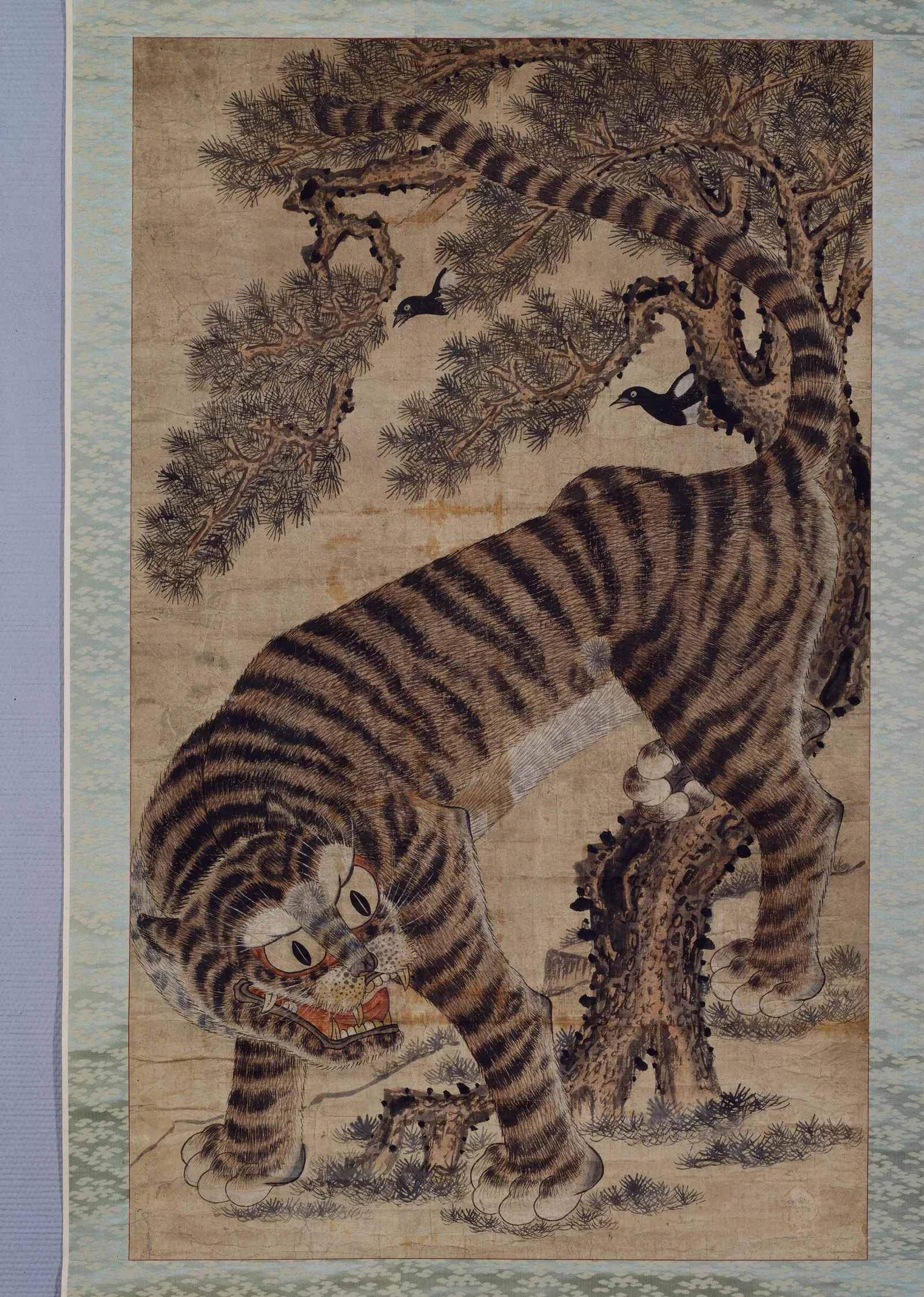
Tiger and Magpie, National Museum of Korea · e-Museum (KOGL Type 1)
Of all antiques, the one that most transforms a room is, unexpectedly, a painting. A tiger grinning foolishly under a magpie; characters blooming into pictures in munjado; birds and flowers in hwajodo. Most of these carry no signature — they were painted by artists who left no names, and that is precisely their charm. With the price of a famous name removed, only the painting remains, so you may choose purely by whether you love it. The art market rarely offers more honest terms.
Nameless does not mean naive. The humor and freedom of Joseon minhwa captivated Yanagi and Japan's mingei collectors early on, and today the genre hangs in major museums worldwide. Perspective is cheerfully ignored and the tiger smiles like a house cat, but that candor is exactly why minhwa looks so sophisticated on a modern wall. Picasso spent a lifetime trying to learn to paint like a child; Joseon's unknown painters simply started there. Begin with something small you can hang without ceremony. Check the fading, the paper, the mounting — and remember that color mellowed by a century is not a defect but an atmosphere. Change one wall and you change the whole room.
10. Jogakbo Patchwork — Before Mondrian
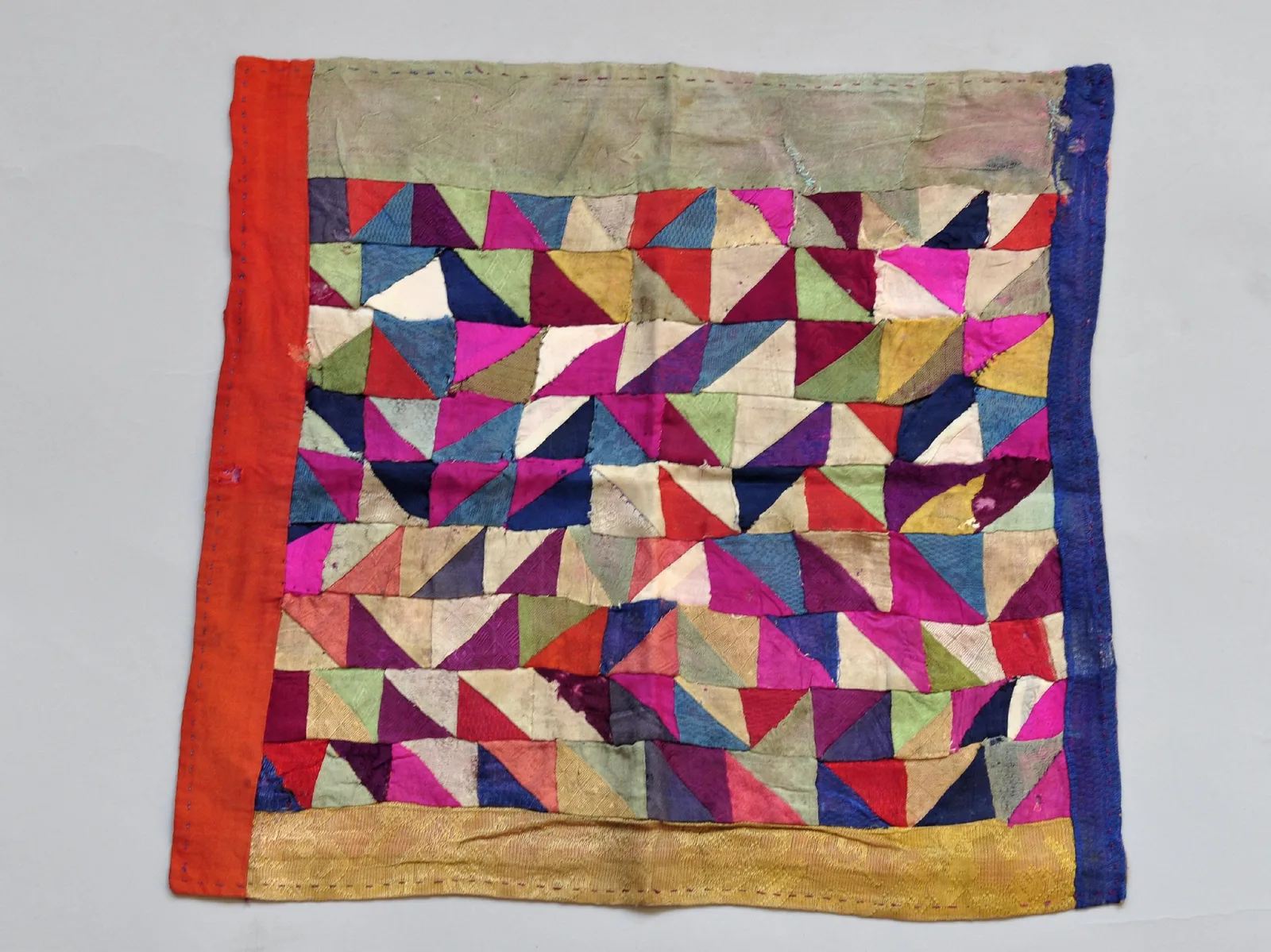
Silk jogakbo, Hallym University Museum · e-Museum (KOGL Type 1)
Looking at a jogakbo — a wrapping cloth pieced from leftover scraps of silk and ramie — people invariably mention Mondrian. Chronologically, the jogakbo came first, by a wide margin. Before Mondrian was born, Joseon women, refusing to waste a scrap, had already arrived at color-field abstraction with a needle and thread. Where Western art history needed revolutions and manifestos to reach "abstraction," a Joseon sewing basket sufficed. These nameless women are the most underrated artists in Korean antiques.
The beauty is in accidental composition: the size and color of whatever scraps were at hand decided the picture, so no two jogakbo in the world are alike. Ramie ones glow like stained glass when light passes through; silk ones settle into low, soft color. Framed, it is a painting; hung by a window, it does what curtains cannot; laid on a shelf or a soban, it warms the room by half a degree. Textiles are fragile before light and humidity, though — keep them out of direct sun, and start with a handkerchief-sized piece. Small is no loss: the genre's charm lies in composition, not scale, and one small square holds a woman's entire sense of color.
In Closing — Will You Keep Looking at It?
The question that matters when buying your first antique is not "how precious is it?" but "will I keep wanting to look at it?" When Bernard Leach boarded his ship hugging a moon jar, and when Yanagi lingered in front of a soban, it was not an appraiser's arithmetic at work.
One small soban, one white porcelain bottle, one old wooden plate is enough. Bringing home an antique is not buying a perfect new thing — it is inviting the traces of time into your home. Look slowly, choose slowly. That slowness is the first gift antiques give you.
Related
GOBOKII Journal
"But We Live in an Apartment" How to Bring Joseon Furniture Home
Antique Archive
A bandaji under the TV, a sabang-takja as open shelving, a medicine chest as an organizing genius — GOBOKII's practical guide to living with Joseon furniture in a modern apartment: placement, mixing, and care.
GOBOKII Journal
Where to Buy Korean Antiques in Seoul: A Janganpyeong & Dapsimni Walking Course
Antique Archive
A Korean-antique walking route from Janganpyeong’s Useong and Songhwa buildings to Dapsimni’s Samhui Arcade — weaving in good food and GOBOKII’s Object Shop and Atelier.